


Over the nearly 3 years that I’ve worked on this podcast, invariably I get a private message along the lines of:
I enjoy your podcast … but …. I’ve had/I’ve known people who had a recovered memory … I think recovered memories make sense … Why don’t you explore this? … How do you know you’re so right?
My (least) favorite message asked: What sort of research have you done anyway???

Well, none. I’ve done no primary research into how the brain processes memory, as that’s not what’s happening here. I’m a writer turned amateur journalist who, after realizing there was little chance to ever share an essay I wrote about my experiences with the recovered memory movement, decided to create a podcast about the subject, simply because I am a compulsive podcast-listener. I used to listen to too much This American Life and now here I am.
(Note the unstated negatives: I am not an academic of any variety, not a memory scientist, psychologist, philosopher, nor neuroscientist.)
I reach out to a wide variety of guests (many of whom decline) and put together a story, after months of reading and researching. I am open to forming new ideas and incorporating new information, but indeed I have a point of view on this which is - I don’t believe that recovered memories/repressed memories are a thing. Which if you listen to Season 1, is because I once did believe in this pseudoscience.
Partly those objectioners object because they do not fully grasp what a belief in recovered memories entails. They think that I am saying something like - people don’t ever forget things/events/people that made them feel bad. Which is not what a repressed memory is. (And to be precise, as Dr. Otgaar noted, we cannot even contemplate a repressed memory because we have not ever ‘seen’ one. Only once remembered, aka ‘recovered’, can such a memory be examined. These are thus boutique, circular terms for a process invented by Freud). People do forget bad things that happened to them and personally I wish I could forget more of them. Repression and recovery of memories are words used in common parlance in a manner that doesn’t reflect their actual meaning. (There are many such examples of the concept creep of our psychological age; forgetting is to repression as sadness is to depression).
Since these emails crop up periodically and always make me feel misunderstood, with no comeback other than- well thanks for your comment and please re-listen to all of Season 1 - I decided to compile my rebuttals and explanations in one spot in a listicle manner that will of course, please not everyone. It is written with an eye to the absurd and not in an academic manner. Following this list are resources and papers describing pertinent research.
Memory is extremely unstable and malleable. I was an only child so my childhood memories are perfect and accurate, but most people describe a Rashomon-like experience sharing memories with siblings. We remember things differently than they occurred!
Our entire concept of memory is a cultural construct. Did people in 1750 have cinematic flashbacks? No, because we understand our memories in terms of the technology we are exposed to. At different eras in history, humans cultivated different beliefs and orientations to their pasts, which you can hear about in Episode 5 of Season 2.
The basic mechanism of evolution would argue that we do not forget traumatic events, nor block them out in an effort to remain calm and preserve our mental health. I am sure my ancestors worried all night long about their latest brush with death and talked about/thought about how to avoid such an event in the future. Those who blocked out (aka repressed) the saber tooth tiger ambush/narrow escape from a brush fire/watching their family be swept away after camping in a river bed? They would be dead, and soon.
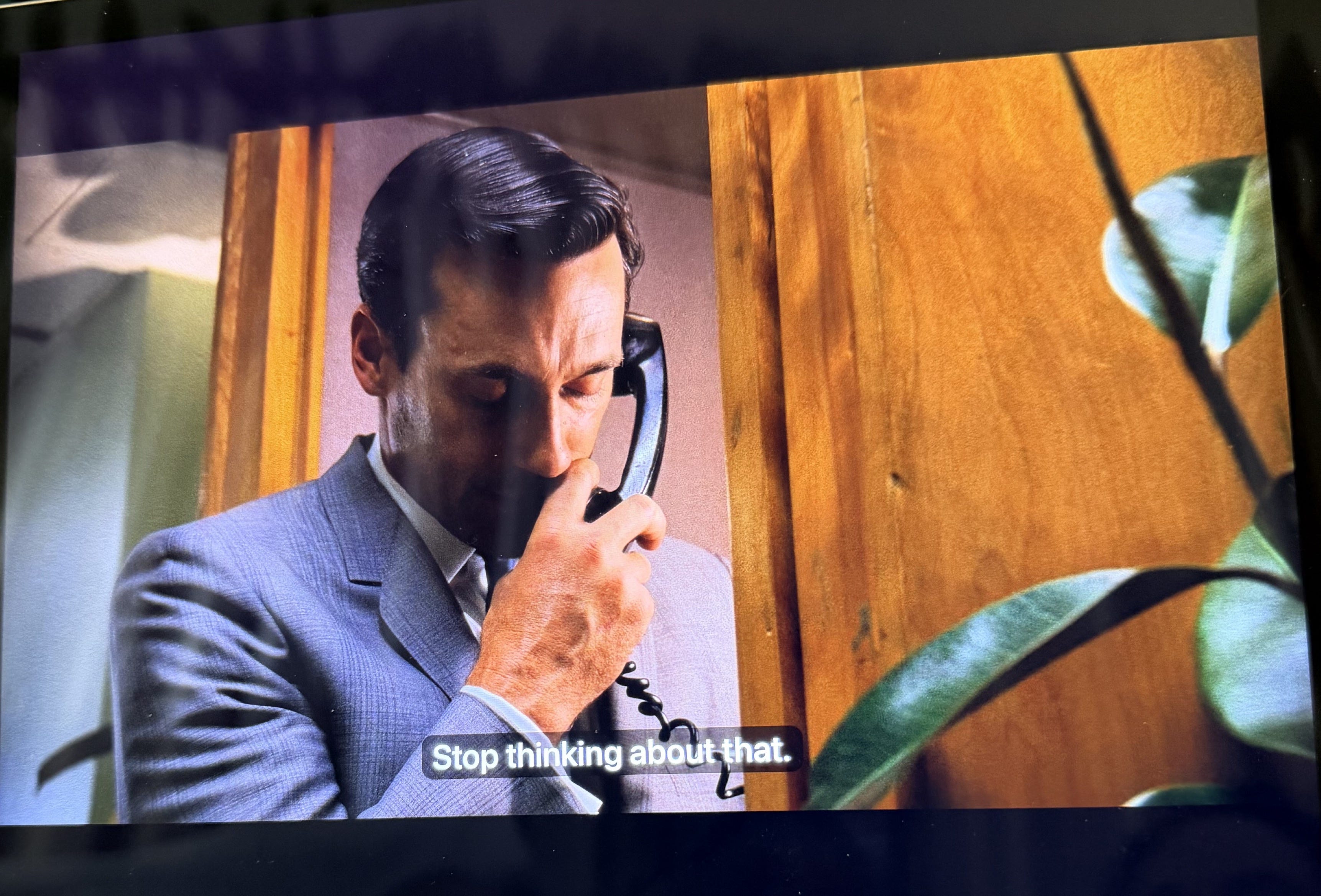
We do deliberately suppress bad events and actively put them out of our minds to keep functioning. This is not Freudian repression and does not indicate an unconscious drive nor a self-protective mechanism. Don’t think about that is sometimes really good advice!
We are forgetful! I sometimes think I wasted my life reading books I do not, now, remember but this is normal (unless you are Marilu Henner).
Sometimes we suddenly remember things! This is also normal and does not indicate purposeful amnesia that shielded those events from consciousness. Often these Proustian, sense memories pop in with an unexpected power. Once several years ago I entered a church rectory and was stopped in my tracks - it smelled exactly as my Grandparents’ house did in 1977 in Wauwatosa WI. The steps to the second floor even had the same treads on the edge of each step. I had not thought about my Grandma in a while but I had also not forgotten her.
Myths in psychology are sticky and not limited to repressed memories. Western societies have been soaking in a psychological paradigm for over 100 years so that it now functions like a belief system that appears timeless and absolute.
Terrible things happen to people all the time, and saying this is not a diminishment of these terrible things. I cannot explain them and I would certainly never deny the truth of anyone’s experiences. These things are terrible and we experience them, however unfairly distributed they may seem. Your suffering could be much more terrible than mine. I am not a Buddhist but these lines attributed to the Buddha seem accurate:
birth is suffering (dukkha); aging is suffering; sickness is suffering; death is suffering; sorrow, lamentation, pain, grief, and despair are suffering; not to obtain what one wants is suffering.
Memory is usually defined in terms of metaphor, which is fine, but open to distortion*. Importantly, over time, we begin to consider the metaphor itself as an absolute fact. Indeed I am a product of my age and have internalized lots of the modern metaphors. Here are some metaphor highlights:
Memory is the stomach of the mind where emotions can be experienced after being digested, and stored as memory. How else can we look back on a happy time with sadness and a sad time with contentment? From The Confessions of St. Augustine, 401 AD.
Repression is a psychoanalytic term invented by Freud that utilizes a potent metaphor from fluid hydraulics - when something is pushed down/ repressed (underwater) something else is forced up elsewhere. It is a neat idea that obviously captured a feeling people had about memory and amnesia as the 20th century began. It must have felt accurate to enough people to gain traction. But let’s be clear - this model of the psyche was postulated without research or investigation. As Frederick Crews said in Season 1: It is just Freud’s say-so, that’s all it is.
Freudian psychoanalysis grafts the appealing idea from non-evidence based folk medicine onto a model of our mind. Illness can be catharsed out of oneself, a psychological version of old timey purgatives (vomiting) and laxatives/enemas to rid ones’ body of illness in a grand and healing catharsis. Now we accept this formula for our minds, but someday we may look back and shake our heads at this ‘logic’.
Memory is like storage on a computer - all ones’ memories persist, somewhere in the cortex or mid brain, and can be retrieved.
Memories are like movies.
Photos are now ‘memories’ according to my phone but this is not really a metaphor, it is just not true.
Overall I agree with the sentiments expressed by novelist Dan Chaon in Episode 5 Season 2: the idea that a psychologist can unlock a special memory vault is just …silly. It has spiritualist overtones, reflecting some of the history of therapy’s evolution. It is about cosmic justice, to be achieved in ones’ life.
I agree with the summary of Lawrence Wright from his book Remembering Satan “Whatever the value of repression as a scientific concept or therapeutic tool, unquestioning belief in it has become as dangerous as the belief in witches.” Maybe repression is a therapeutic tool, but is it helping people?
What more could I add than the insights of philosopher Ian Hacking? In his book, Rewriting the Soul: Multiple Personality and The Science of Memory, he wrote about how the science of memory has shaped our modern self-understanding.
“The recollection of the past is different to the past lived. When it is remembered, the past is reorganised, not as a false past, but a past that is rewritten in memory, with new kinds of descriptions, new words, new ways of feeling. Redescriptions of the past are caused by the present.” (pg 94)
*”The price of metaphor is eternal vigilance” is a maxim popularized by cyberneticists Arturo Rosenblueth and Norbert Wiener.
I have considered a dollhouse as a great metaphor for memory and childhood (see above), and I encourage you to develop your own personal memory metaphor.
Further reading:
An excellent summary with many links: Rethinking repression − why memory researchers reject the idea of recovered memories of trauma
“The notion of repressed memories runs counter to decades of scientific evidence demonstrating that traumatic events tend to be very well remembered over long intervals of time. Many victims of documented trauma, ranging from the Holocaust to combat exposure, torture and natural disasters, do not appear to be able to block out their memories.”
What science tells us about false and repressed memories. Otgaar, Howe, Patihis, 2020
https://www.tandfonline.com/doi/full/10.1080/09658211.2020.1870699#abstract
I think yours is one of the best explorations of the recovered memory fiasco that I have heard/seen. Thank you for this incredibly well written answer to a difficult question!
Wanted to make sure anyone interested in this topic reads this great article - an excellent resource, neatly summarized.
https://freddiedeboer.substack.com/p/recovered-memories-arent-real?r=ddtc&utm_campaign=post&utm_medium=web