

The Age of Contempt
Personal emissions

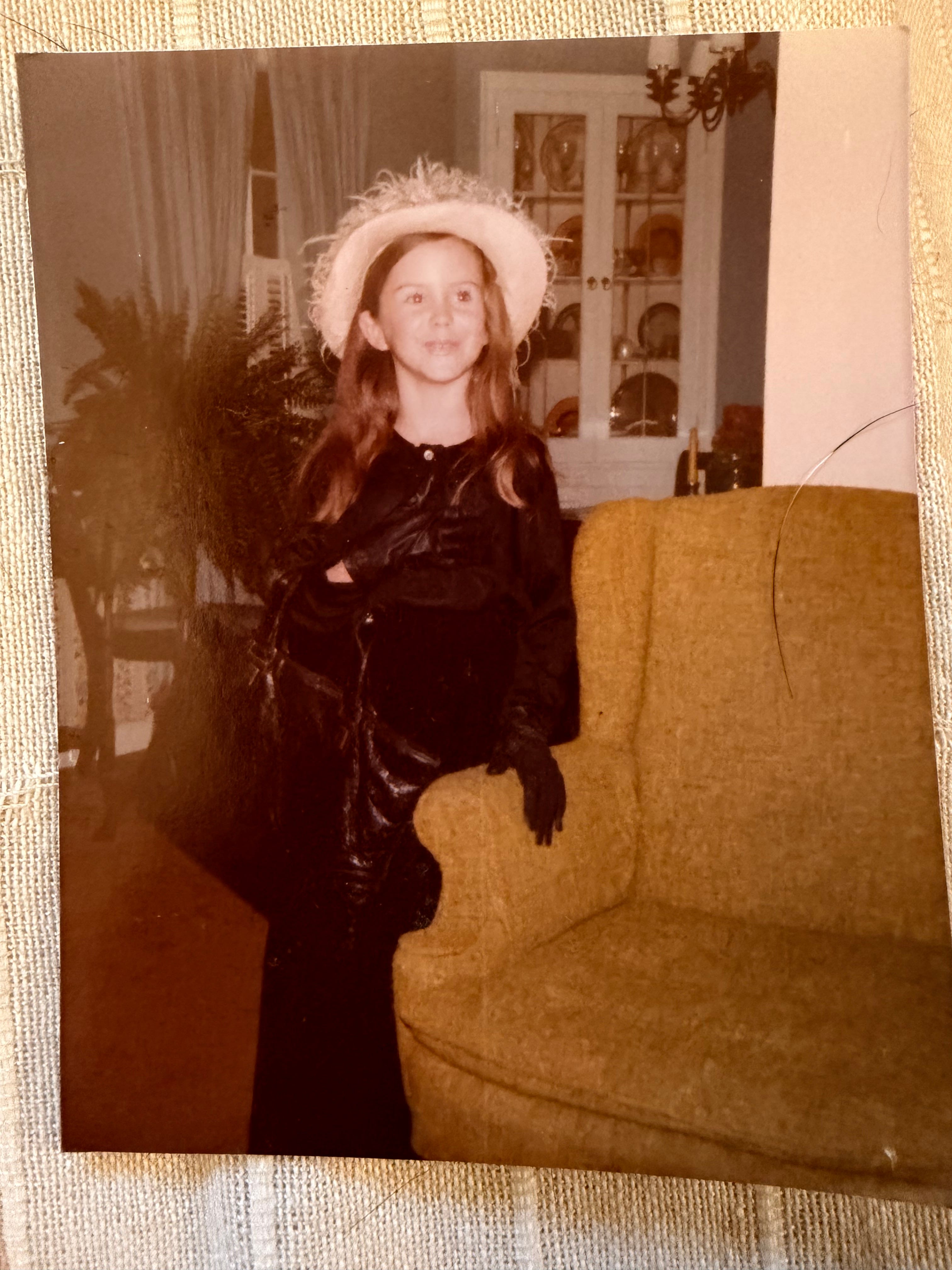
When I was a little girl I read stories about girls at the turn of the 19th century - imagine Edwardian white dresses with pin curls and velvet ribbons, girls scampering about with innocent clever glee. I read many such stories because I was a voracious reader and also because that’s what happens when you’re old - you are exposed to stories and ideas from a much older time. The dresses that filled vintage and costume stores of the 1970s were pinafores and lace up boots. Today they are oversized black concert T-shirts and wide-lapeled suede jackets. So the worm turns.
In one such story a little girl on the cusp of some sort of age of maturity (was it 12? 13?) politely brings something to a gathering of adult party guests and one of the guests, an old man (was he 38? 40?), exclaims - Good god she must be married off soon.
I read this with alarm - what had she emitted in their brief interaction? She was giving something away, something embarrassing and animalistic. A tell, unbeknownst to herself. That idea frightened me, heralding a dawning self-consciousness about my teenage body. I had to get myself under control.
Of course now I see that the old man was merely responding to his own attraction to her, marking her as dangerous because of what she provoked.
Now, a million miles from such a (fictional) interaction, I realize: the project of identifying and assessing my emissions has been the understory for my entire female life. I am still engaged in screening my emissions, even as they grow fainter and uglier.
“I found myself understanding a new sort of truth: …that women’s bodies were to be noticed and scrutinized and found attractive in all sorts of ways that I had not heretofore conceived. Chins, hands, throats, bellies, asses, legs, feet all were to be considered and fetishized or dismissed.”
This is a brief essay about the novel Vladimir by Julia May Jonas, which you might already know from my opening, had you read the book. No longer a little girl, I too am now a “post-menopausal creature” who greedily read the novel after hearing about it on promotional platforms designed for younger women. I am a Vladimir superfan, but that is not something I have previously wanted to draw attention to. I love Vladimir, I might say in an online writing forum, and wait to evaluate the responses. Do they see what I saw, did they too climb into her skull and look out in amazed familiarity?
Thinking about it, 2 years or so after first reading, still gives me a frisson of pleasure. The only other book I’ve written about here on Substack was another much loved novel of my adult life, Gone Girl, and the two novels share a theme meant just for me:
I can’t believe they admitted to those thoughts and feelings.
Were I to encounter not a novel but an essay extolling the same themes by the unnamed narrator of Vladimir … well, I would not read it. I have no patience, only (self) contempt for the woman airing her grievances and feelings, disdain for the personal-essay machine. That writing seems to draw one conclusion from consideration of female emissions - outrage. Okay, and? I find those ‘takes’ on the conditions of feminine life very boring. I am tired of engines that demand my personal experiences be turned into empty political grist, and yet I guess I do enjoy recognizing myself in writing - a narcissist in the end, just like everyone else.
Out of self respect I should not admit to recognizing myself in Julia May Jonas’ Vladimir, but I do. I did and I do, and that is embarrassing to someone who doesn’t cop to feminine (read: domestic) dramas, but lucky for me - neither does she.
I could write about the plot of Vladimir, or its many satisfying easter eggs or her lust for the titular man, Vladimir V. , or about her husband’s peccadillos or her evisceration of collegiate politics. I could write about her love for her daughter that emerges like a beam from a lighthouse, a relief that our nameless narrator has this warmth and connection to empower her life.
But the heart of Vladimir is the narrator’s relationship with herself.
“Vanity has always been my poorest quality. I hate it in myself and yet am as plagued with it as I am with needing to sleep or eat or breathe. …still all the while I feel trapped in the prison of vanity.
If I can’t be a woman who is effortlessly beautiful, I wish I could be one of those women who, gracefully or ungracefully, move through the world unconsciously, with a kind of peace about their physical form. I have never had that peace, I have always felt tortured about my looks.”
As I passed 50 I came to the understanding that I was entering the contemptible age - an insight I think the narrator of Vladimir would appreciate, if dismiss as obvious. By which I meant I had reached a status where I could be openly seen as an object of contempt. A middle aged [blank] woman, and in the blank you add whatever redundant and pejorative adjectives come to mind. Whereas once my desires might have been dangerous, then foolish, then frenzied, now I can be openly mocked for them.
“He could always make me despise myself, make me feel fundamentally self-conscious about my idiotic femininity and my pathetic peevishness…”
The clothes in my closet are the same and yet things that once looked one way now look another. Stylish to staid in one solar rotation. The whiff of sexy I imagined in a Chanel-style jacket and short skirt has been erased, transformed into Ida Blankenship.
But when had it been otherwise? I started training for this in childhood. Haven’t I been pre-screening my behavior for those tells all along? When did my self-contempt begin and when, if ever, will it end?
Which is where spending time with the narrator of Vladimir is so helpful. A stern, darkly funny friend who brooks no bullshit. She recognizes herself in the category of contemptible women: “Older women with lust are always the butt of the joke in comedy, horny sagging birds with dripping skin.” Life as a woman in your 50’s is precarious - indeed life in your 50’s is precarious but for women there is a unique knife’s edge - fuckability, the emission I never wanted, flustered and fearful, until it was gone. She unearths the mother-in-law joke, buried under cultural opprobrium but oh my it is there, just under the surface.
I recognize what happened to the narrator of Vladimir: the terms of acceptance and relations were set, in her marriage and job, and then, out from under her, they changed. She is as honest as a plastic surgeon in assessing her flaws and loose skin, frank about her value as an old woman. No one sees them coming but indeed there are hard stops in the world and age serves them up.
“Particular old women are not invited on vacations. Unless they are very rich, which I was not.”
Those hard stops don’t need niceties; such a reality deserves honest words, which the narrator delivers. She knows better. Just like she brings out her “Big Mom Energy” while she politely listens to her students tell her they think she is “hot”, nodding as they tell her how to conduct her marriage. Such interactions with other women are telling, a reveal of one’s perceived age. Other women might be nicer, less threatened by the emissions.
Last year I got a hearing aid (a discrete one, tucked under my vain long hair) for the one-sided hearing loss I’ve had for decades because it is no longer cute to miss out on conversations. What was once a quirk of a girl with upright flesh that defied gravity and underpants stained with menstrual blood, has become an irritating mark of the old. Even the presence of said hearing loss, a downstream effect of growing up around second hand smoke, marks me as old. Nowadays parents ask if they can cry in front of their children. What about lighting up?
Like all really good first person novels, in reading Vladimir I felt myself becoming more aware of my own inner dialog, the judgements, opinions, life hacks and truisms I typically keep to myself. The narrator’s insights work because the narrator is obviously angry about all of this, angry and cynical enough to know there is no recourse. How to then cope? Become a villain, and that release is the most delicious part of this story. It is like taking in an actual healing breath of irony and droll humor and exhaling all the crap.
Gone Girl and Vladimir might not be found together in any other review but to me the connection is obvious: frank heroines, candidly revealing their wicked selves. I can’t believe they admitted to those thoughts and feelings. Amy’s shocking revelation was her description and admission of the ‘cool girl’ persona, a knowing manipulation of her behavior to get what she wanted in the world.
The admission in Vladimir is the pain the self-conscious object feels regarding its expiration date - and her insistence on more, even as she concretizes the object.
What I’ve realized: both characters are villains, but have become so in an effort to manage their female emissions.
The only way out of the logic the narrator of Vladimir exposes is acceptance and expression. But is it too late?
"The clothes in my closet are the same and yet things that once looked one way now look another. Stylish to staid in one solar rotation.” Ooof! How I feel this! Such a great essay, Jena. And I also had the “I can’t believe she went there” feeling from the narrator of the book. It really eviscerated the way women are subjected to a particular indignity of aging in the public eye. And so interesting the way you paired with Gone Girl!
Jena, this essay is great. I enjoy your writing.
Vladimir spoke to me. The narrator’s preoccupation with vanity is so recognizable. I have thought many times (especially in my younger years) how I might walk through the world without self-monitoring or thinking about appearance.