

Nosology
Naming thing

If you’re going to start noticing things, it helps to learn what they are called. When I want to know what a flower is called, for example, I open an app on my phone, take a picture, and learn all about the plant - genus, species and even the health of it.
I love naming and classifying things. It’s a way to make order out of chaos - we step into history to learn systems created by previous humans and apply our shared cognition to the things we see.
Nosology is the naming and classification of disease - what doctors do, and specifically what pathologists specialize in. Disease can be classified by symptoms, by the damage it does, or the most satisfying - by the cause.
We often don't think much about how things are classified, unless there is an obvious mix up.
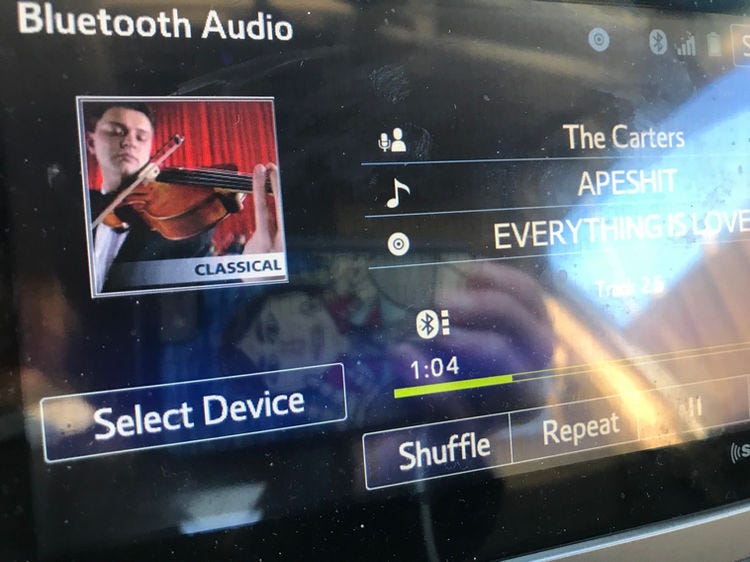
Classification though is at the root of our understanding of the world. Your knife collection, your music collection, your desktop and your clothing drawers have all been categorized by you. What criteria are you using to categorize your items? You might not even be aware of what similar features each category shares and what made you put them together.
We humans broadly tend to want to either put things together or keep them apart. We see either basic divisions with variations, or multiple integral variations.
Which one are you? (Yes I realize this is categorizing categorization!)
Do you think two things belong in the same category unless there is some convincing reason to divide them?
People in this group might believe the world is too fragmented. We need consolidation to bring order.
Or do you think two things are in different categories unless there is some convincing reason to unite them?
People in this group might believe things as they exist are too jumbled and opaque - they must first separate things to better analyze them and thus bring order.
These broad human tendencies are described with very inelegant terms: LUMPERS and SPLITTERS, describe two basic tendencies of humans when we categorize things.
And if this two-part distinction bothers you, you might be a splitter! This in and of itself is a lumper-sort of thing to do.
(Confession: I am a lumper).
It's important to note that no one does either of these all the time - our tendencies emerge when we are faced with something unclear. This dichotomy is typically explained in Biology courses and the terms arose before Darwin.
But I think these distinctions have relevance outside of Biology. Specifically when it comes to noticing our world. Anytime we observe and seek to categorize our world we can fall into these camps.
Some questions for you to consider from 'real life' * :
When faced with five subtly different things, would you rather see one page with a general description of all five, or five pages precisely describing one entry each?
All things being equal (cost, weather, time) would you rather do your back to school shopping at an inclusive department store or visit several specialized boutiques?
Do you use one knife for everything, or do you have a separate knife for each item? (i.e. Chinese practice would indicate using a cleaver for everything).
No matter your tendency, the important thing is to realize neither approach is wrong. This tendency in oneself is something to notice, not corral or dismantle. When you accept your perceptions and treat them as valid - that is the beginning of creativity.
When I take notice of the world around me, I try to focus on the details and let my mind wander. Noticing new details can suggest new categorizations, unique categorizations that only I might perceive. When shared in a poem, these novel connections might resonate with others - hinting at a shared reality others can relate to.
*I can think of more controversial examples too - areas where we might paint people with too broad a brush to make sense of what we perceive to be disorder, the broad brush being called Stereotyping. Stereotypes about behavior help us manage our perceptions - but obviously can diminish our relationships. Simple awareness of our distortions can help mitigate overly crude categorizations.
Biologically determined differences set the stage for how we make sense of the world. Our culture shapes what and how we value our assessments.
I think I'm a lumper. A friend once gave me a drink made with vinegar and fruit juice, and I said that it was good, noting it was essentially lemonade. Apparently I'd made the same comment earlier, and it pissed her off! Splitter, meet lumper.